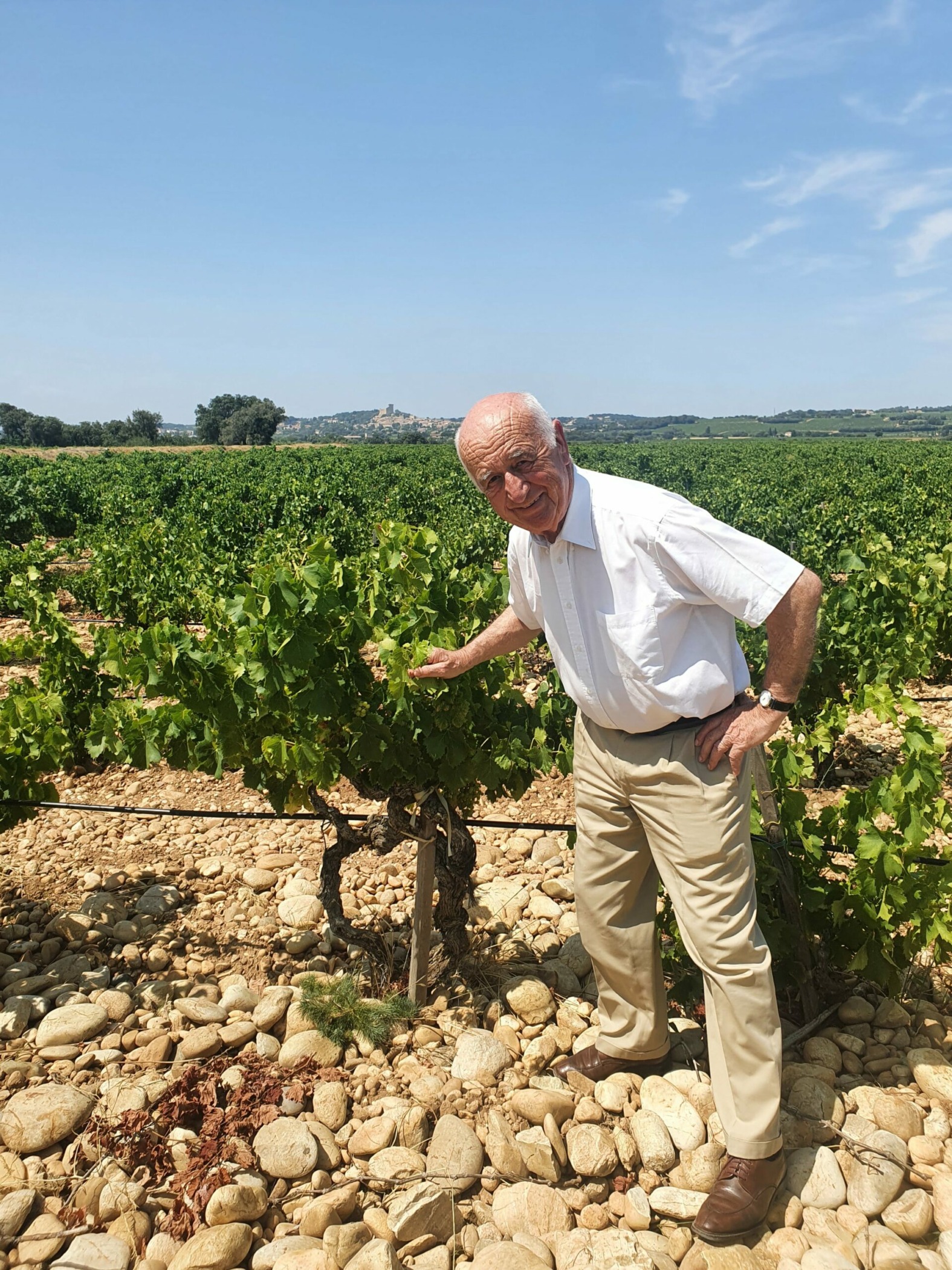
 The owner
Jean-François Hénin
A passion for Mourvèdre and a long-term commitment to the land. His investment in vineyards, a new cellar and the team gives the estate’s renewal a tangible foundation.

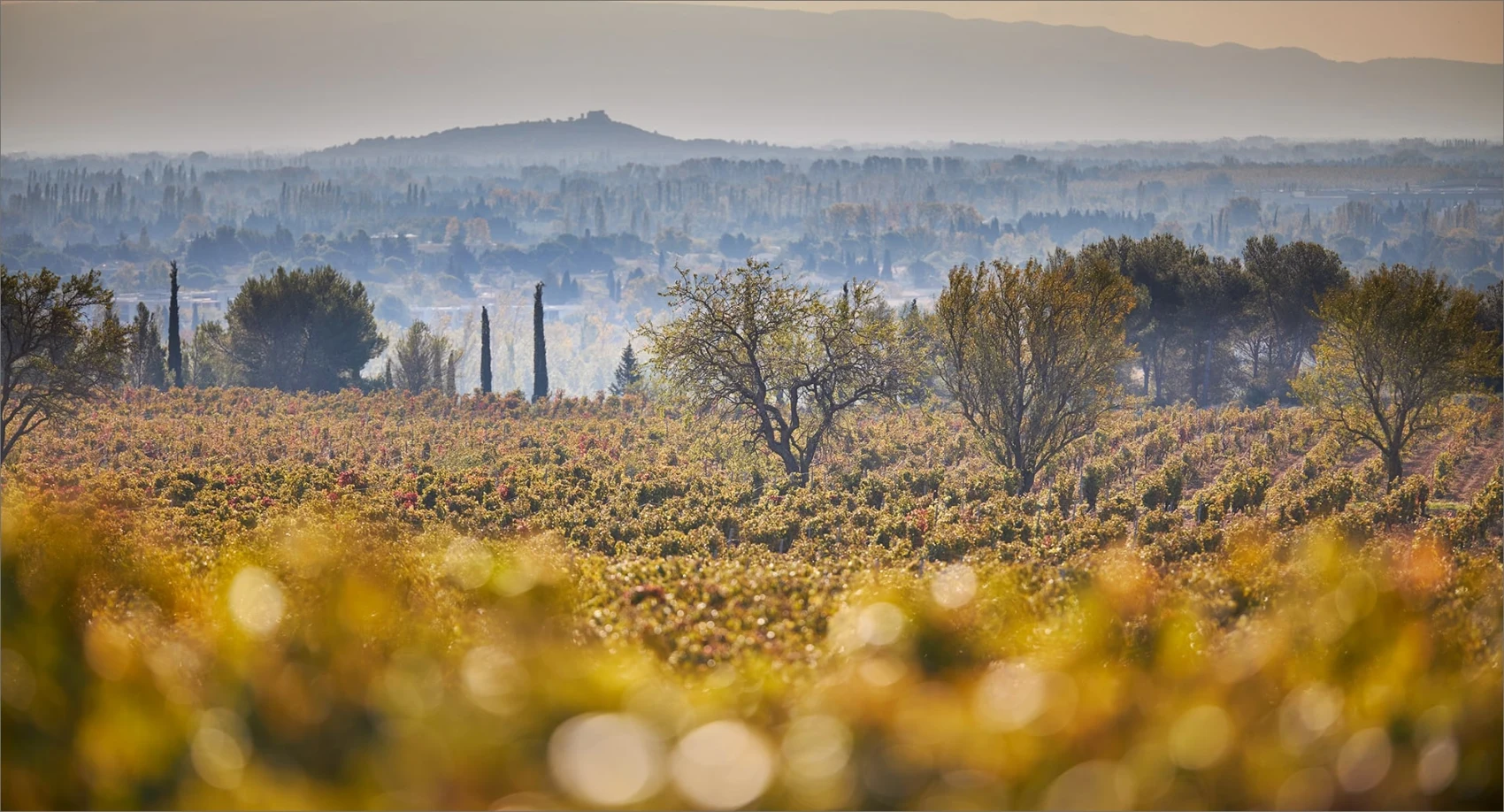 Southern Rhône · France
Châteauneuf-du-Pape · Sorgues · Signargues
The rise of
a new classic.
Châteauneuf-du-Pape opens the door.
Discover the people, places and wines of Gigognan.
01 / The estate · Sorgues
110 hectares, from Côtes du Rhône to Châteauneuf-du-Pape. A southern Rhône estate with more than one expression.
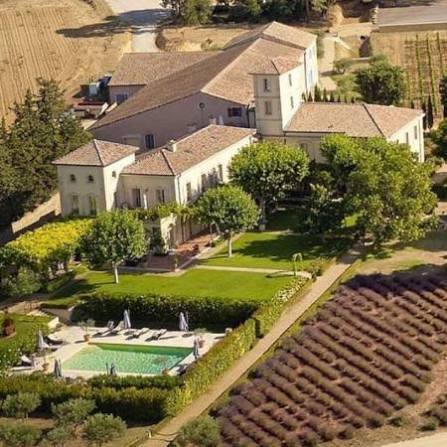
Rounded river stones, sand and clay-limestone. Vineyards on both sides of the Rhône. The château is in Sorgues, at 1180 chemin du Castillon.
Estate area breakdown ↗ · Regional sunshine estimate ↗ · Météo-France Avignon rainfall: 648.8 mm ↗. Sunshine is an approximate regional description, not a dated station normal. Rainfall is the nearby Avignon station’s published mean; neither is a château measurement.
02 / The people
Since acquiring Gigognan in 2017, Jean-François Hénin has invested in the vineyards, the cellar and the team. A new cellar in use since the 2019 harvest gives that commitment a visible form; the wines are where its results can be judged.
The ownerA passion for Mourvèdre and a long-term commitment to the land. His investment in vineyards, a new cellar and the team gives the estate’s renewal a tangible foundation.
 The vineyard
Leading the vineyard work in the estate’s published profile. Organic cultivation and close observation of the vines connect each season to the character of the harvest.
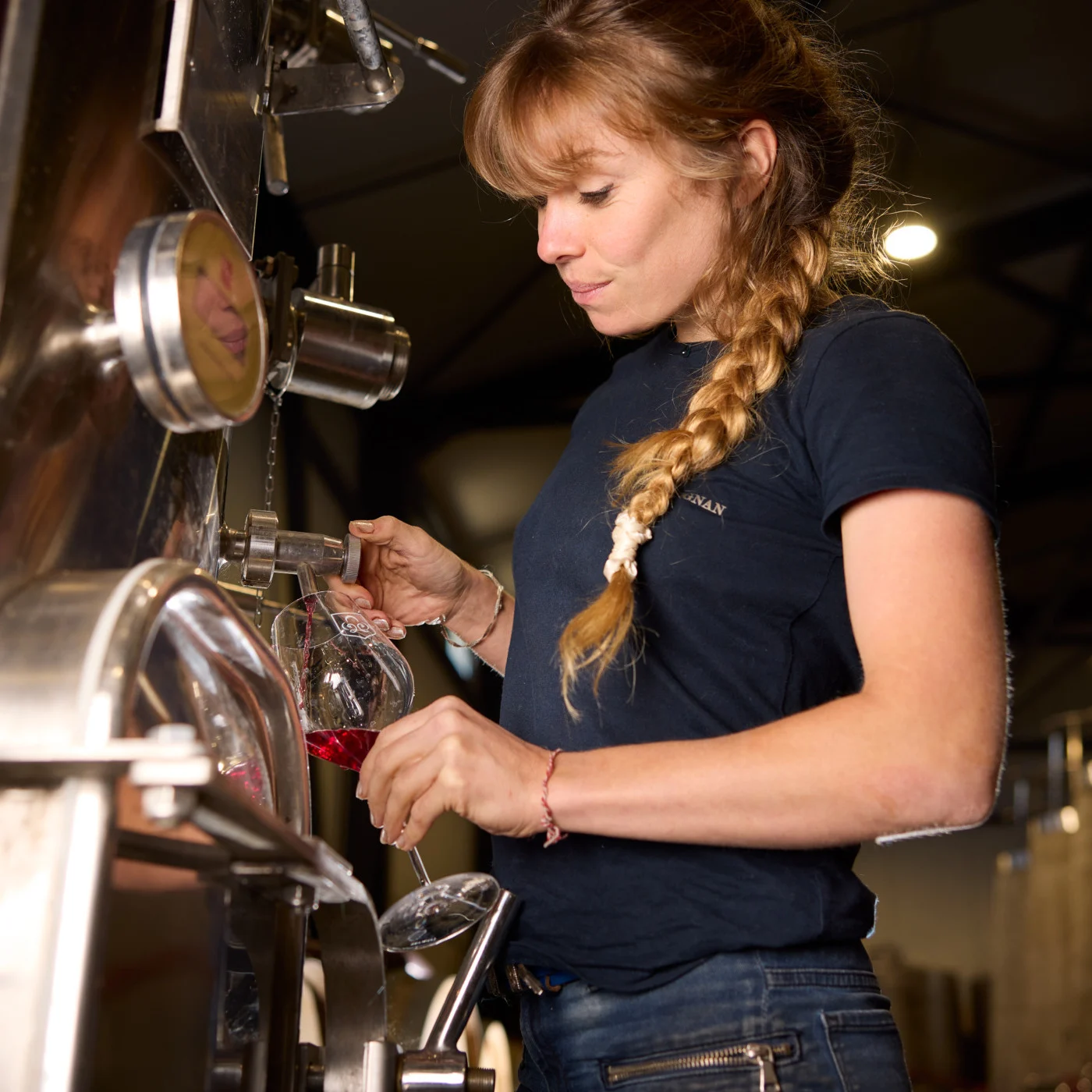 The cellar
Leading the cellar in the estate’s published profile. Her ambition is precise: preserve the fruit, refine the texture and let the differences between parcels speak.
In Denis Saverot’s portrait for La Revue du vin de France, Hénin is also a farmer, with crops and cattle in the Nièvre and an interest in conservation agriculture. At Gigognan, the commitment becomes tangible in vineyard restructuring, a rebuilt team and a cellar in use since the 2019 harvest.
For an importer choosing a partner, that commitment matters. There is a team to get to know, a place to visit and work already under way to assess in the glass.
Jean-François Hénin · the RVF portrait ↗The name Gigonius appears in the estate’s historical account.
The château’s restoration is complete: a setting ready for a new chapter.
Hénin acquires Gigognan. Vineyard renewal and a new cellar follow.
People and history: the estate’s published account ↗. Team roles are attributed to that account.
03 / The vineyards
Around Sorgues, the estate red, Viognier and Bois des Moines begin the discovery. Clos du Roi brings Châteauneuf-du-Pape in both colours. Across the Rhône, Signargues adds the Domazan plateau to the story.
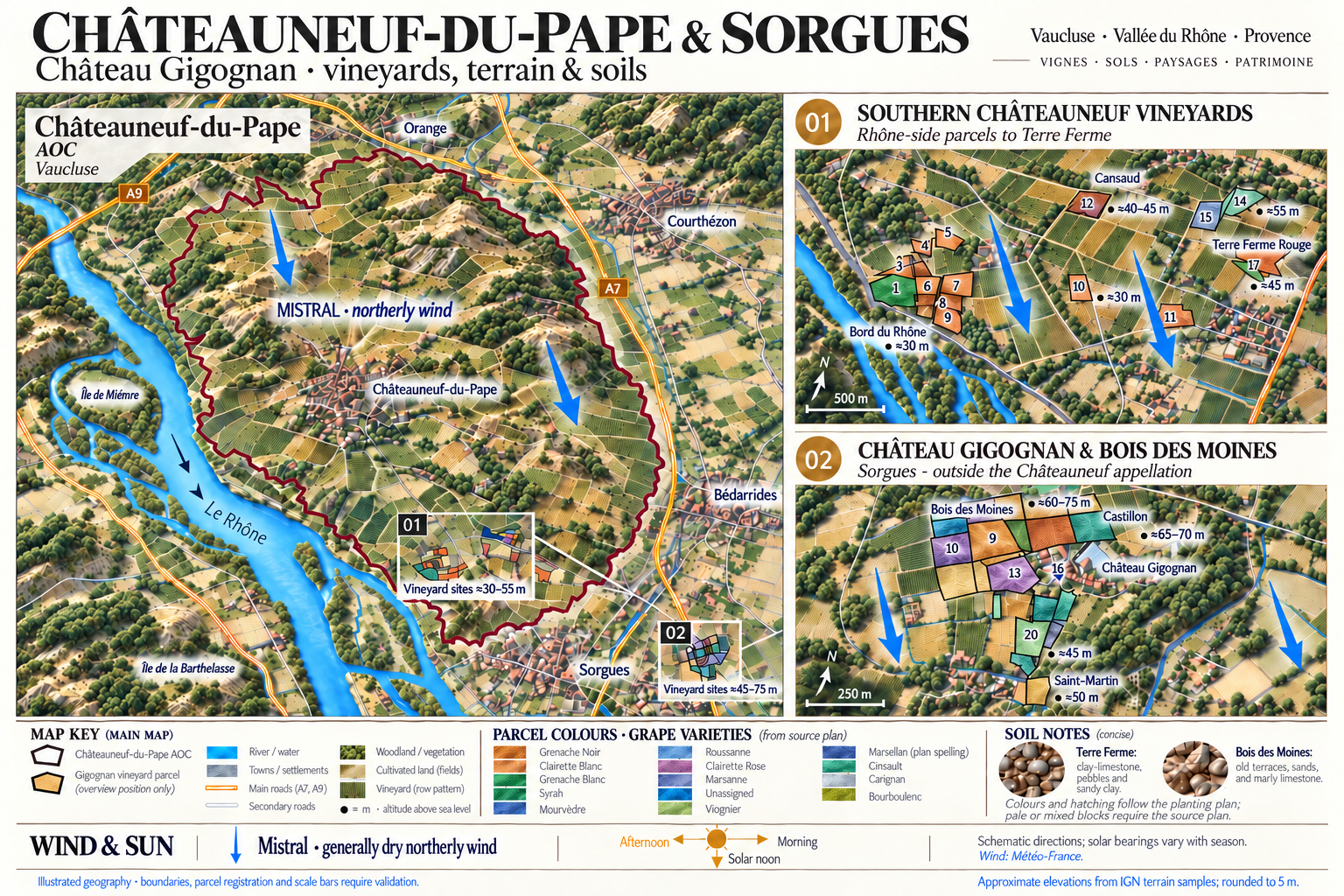
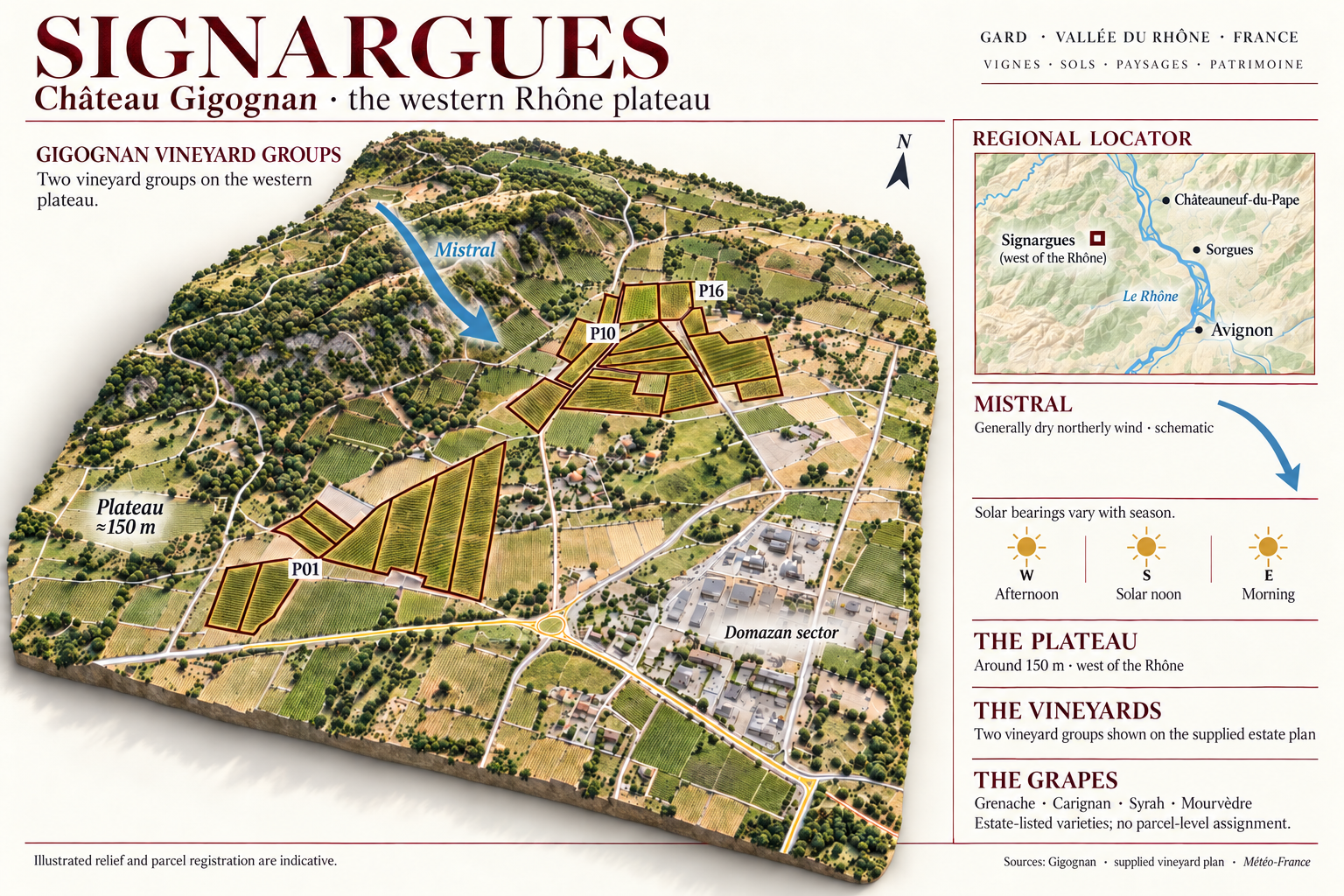
Illustrated geography: boundaries, parcel positions, elevations and scale are indicative. These images do not establish historical appellation status or equivalent slopes.
A name on the label, a place on the map. Côtes du Rhône is a regional wine appellation; Côtes-du-Rhône Villages is a more geographically selective designation. Châteauneuf-du-Pape is a separate appellation. Clos du Roi and Bois des Moines are Gigognan wine names; the appellation on each bottle identifies its protected origin.
East of the Rhône
Côtes du Rhône Rouge · Viognier · Bois des Moines
East of the Rhône
Clos du Roi Rouge · Clos du Roi Blanc
West of the Rhône
Signargues Rouge · beyond the opening five
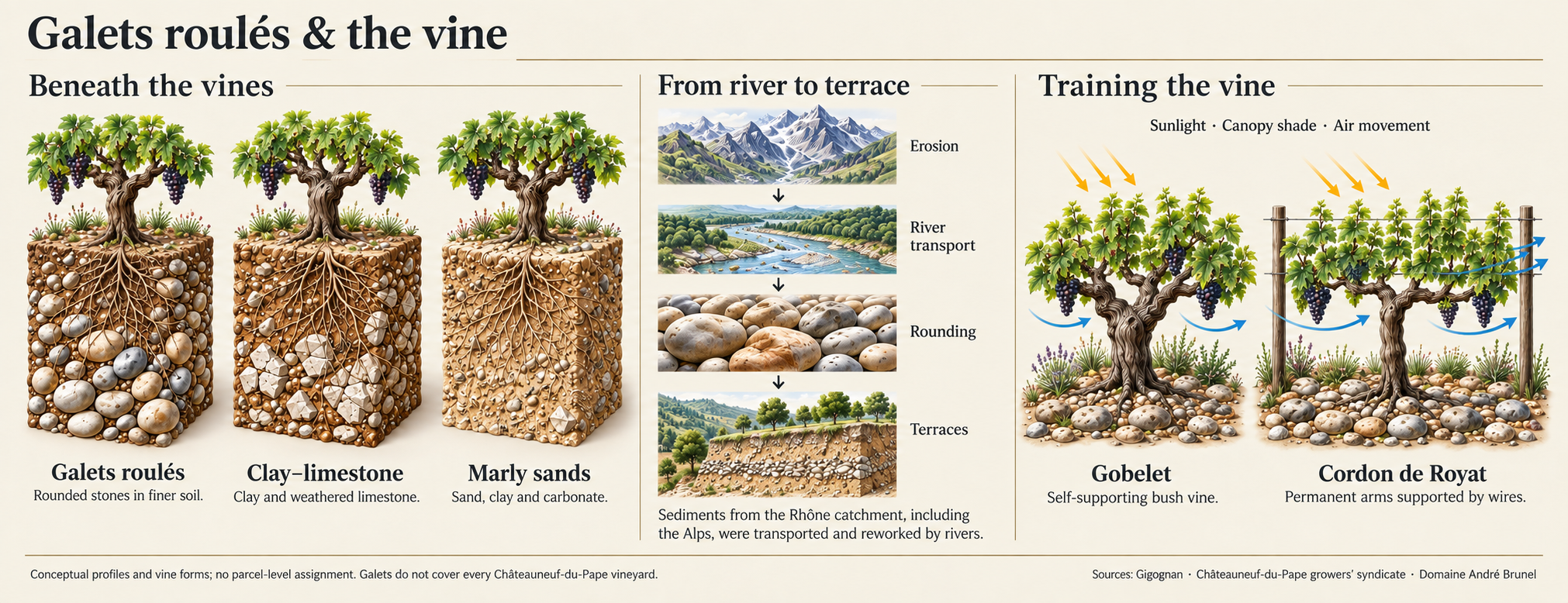
Soils describe the estate’s vineyard settings. Wine character also depends on variety, vintage and winemaking; these are not simple soil-to-flavour rules. The illustrations below give an overview; they are not surveyed parcel maps.
Understanding the name / Châteauneuf-du-Pape
A recognised name opens the conversation. The estate, the vineyard and the wine give the buyer a reason to choose.
The inheritance
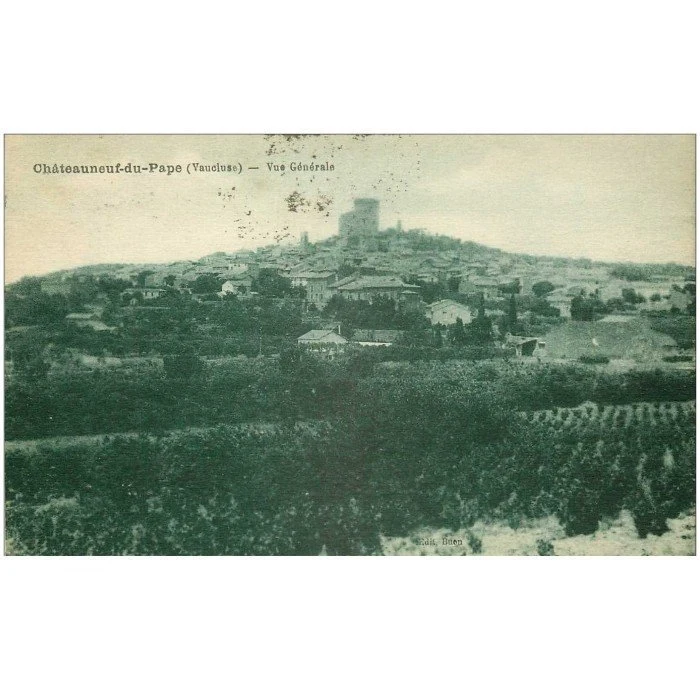
Long before a wine list or a critic’s score, the papal court gave Châteauneuf a reputation beyond its vineyards. That recognition remains an asset. The estate behind the name gives a buyer the reason to choose a particular bottle today.
The Avignon popes brought the wines to their court in the fourteenth century. Foreign visitors carried that reputation home. Châteauneuf was among France’s first wine AOCs in 1936: a famous place backed by a defined origin.
The appellation’s history ↗Grenache commonly anchors the reds, within a broad blending tradition: thirteen grape names, eighteen varieties when colour forms are counted separately. Producers choose their blend; every bottle need not contain all thirteen.
Grapes & blending ↗Sun, Mistral and a varied ground of stones, sand, clay and limestone create several vineyard settings. Expect many reds to offer ripe fruit, herbs, spice and breadth. The producer, site and vintage determine the balance.
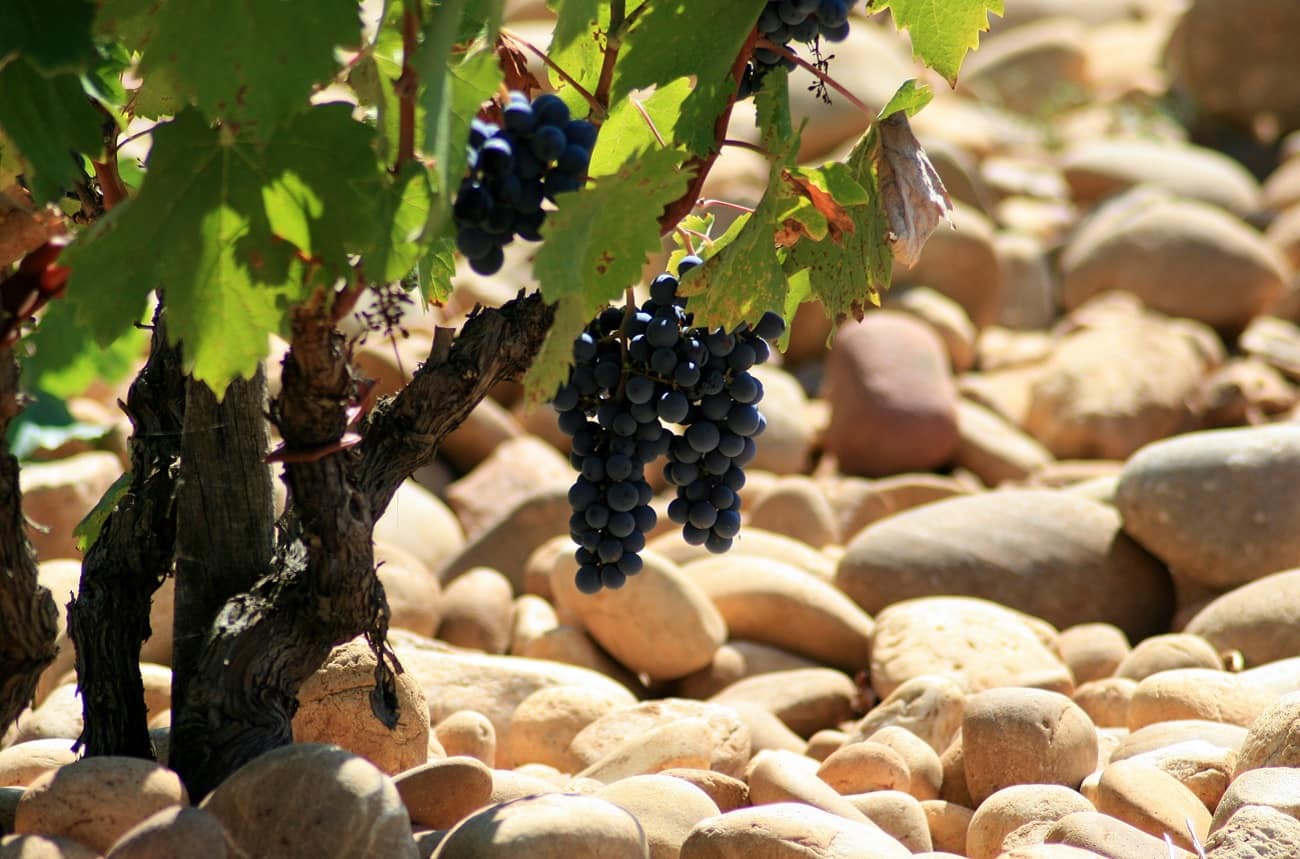
Galets are a recognisable feature, not a requirement covering every vineyard. Whites offer another expression, often centred on texture.
The appellation’s soils & climate ↗Côtes du Rhône is the broader regional appellation. Gigondas, Vacqueyras and Lirac are distinct neighbouring crus with their own identities; Châteauneuf is not automatically better than them. Taste and price decide the choice.
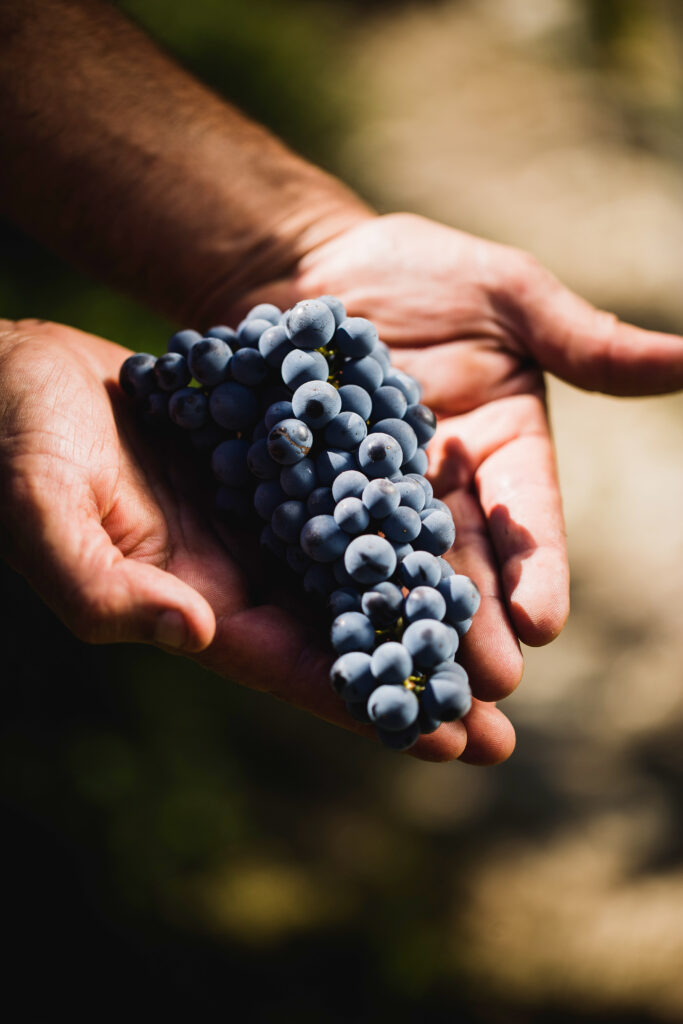
04 / The style
Separate parcels, a considered picking date and vessels chosen for each lot. These decisions give the tasting a focus: follow the perfume, feel the texture and notice how the wine finishes.
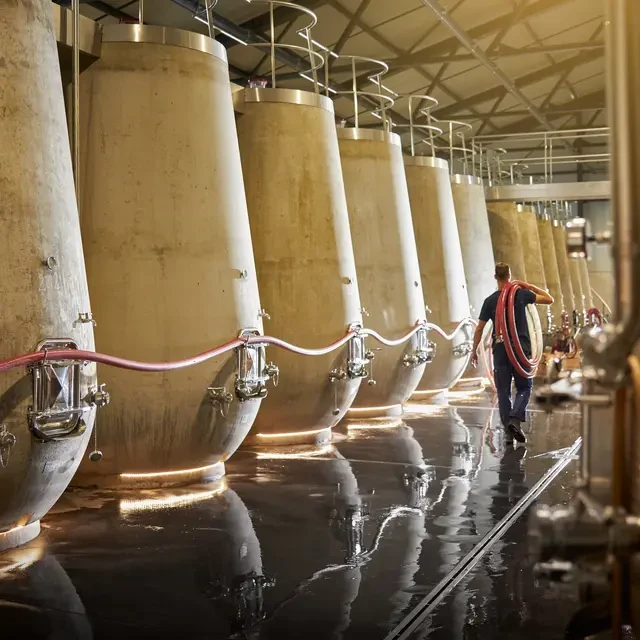
The cellar’s own words
« un style pur,
raffiné et racé »
Jenna Le Lay · a pure, refined and distinguished style.
The estate’s 2024 account describes picking for freshness, keeping parcels separate and choosing the ageing vessel for each lot. The intention is visible in the decisions behind the wine.
Estate press dossier · March 2024 ↗Organic cultivation and attention to picking date support the search for ripe fruit with freshness.
Separate parcels and measured extraction. Tanks, concrete and wood play different roles according to the wine.
Supple fruit and herbs in the opening red. Flowers and texture in the whites. Greater breadth in Bois des Moines and Clos du Roi.
From the ground up
River terraces, rounded stones and finer soils form the setting. Variety, water availability and harvest decisions shape the response. The ground starts the conversation; the wine completes it.
| Starting point | The estate’s response | What to test in the glass | What it means for the account |
|---|---|---|---|
| Hot, dry seasons | Seasonal soil cover, attention to water stress and harvest balance. | Ripe fruit with a finish that stays balanced. | A generous wine that works through a meal. |
| Different sites and grapes | Keep parcels separate; choose the blend for each wine. | Distinct character as you move through the range. | A reason to list more than one Gigognan. |
| Fruit with natural breadth | Measured handling and vessels chosen for the lot. | Perfume and supple texture alongside depth. | A clear tasting comparison with the account’s existing Rhône. |
| A wider white-wine offer | Viognier leads; Bois des Moines and Clos du Roi broaden the tasting. | Different expressions of aroma and texture. | More dishes and customers through which to introduce the estate. |
These are connections to test, not guaranteed results. Feed tasting responses, sales and reorders back into the next selection and the support plan.
Style intention and practices described in the estate’s March 2024 dossier; individual methods vary by cuvée and vintage.
A changing climate / A considered response
For a Southern Rhône estate, the question is increasingly how to preserve balance through a dry, hot season. The answer has to begin with the living vineyard, long before the final blend.
Gigognan describes cover crops after harvest and grazing in early spring. The purpose is to build organic matter and manage vegetation ahead of summer.
Cover crops also use water. Timing and management must respond to the site and season.
The estate identifies drought-sensitive river terraces and allows for restrained drip irrigation where necessary. A parcel’s water supply matters as much as the stones visible on its surface.
A targeted response, subject to applicable permissions—not a claim that irrigation is routine or that drought has been solved.
The estate sets freshness and floral expression among its maturity criteria. Picking is a decision about the whole wine: fruit, acidity, tannins and potential alcohol.
An earlier date alone cannot guarantee elegance. The taste of the grapes remains part of the decision.
Parcel-sized vessels keep lots separate. Concrete and larger wood support texture without seeking a dominant oak flavour; gravity and restrained handling complete the approach.
Methods vary by cuvée and vintage. Estate’s documented practices ↗
The Derenoncourt contribution
La Revue du vin de France identifies the Derenoncourt team among Gigognan’s advisers. That brings a useful context to the renewal: vineyard and cellar considered together. The consultancy’s published philosophy, now under Vignerons Consultants, joins viticulture and winemaking rather than treating them as separate disciplines.
For an importer, the meaningful question is what that enables: a team able to interpret each parcel, keep its options through vinification and assemble for a desired balance. The estate’s separate lots and range of vessels give that intention a practical form.
RVF’s Gigognan profile ↗ · Consultancy philosophy ↗. Published involvement; the current named consultant and mandate should be confirmed.
The grape repertoire
Gigognan’s red repertoire includes Grenache, Mourvèdre, Syrah and Cinsault, with old Carignan at Signargues. Its whites draw on Grenache Blanc, Clairette, Roussanne, Marsanne, Bourboulenc and Viognier. That breadth gives the team several ways to build a wine, and the importer several ways to introduce the estate.
A grape name alone does not determine elegance or climate resilience. The important relationship is variety, site and intended style. Syrah can contribute perfume as well as structure; changing its proportion only makes sense in the context of the complete blend.
Estate grape repertoire ↗. A shift towards less Syrah has not been established from dated planting or blending records.
Taste for perfume, tannin texture and the finish alongside the fruit. Ask whether the wine still feels balanced with food and as it warms in the glass. Those are better tests than assuming one regional style.
The working vintage inputs remain 14.5% for the opening red and Clos du Roi Rouge, 15% for Bois des Moines Rouge, and 13.5% for the selected whites. These are full-bodied wines. Freshness is a sensory claim to test, not a substitute for the ABV on the label.
Begin with Côtes du Rhône Rouge and Viognier, then explore the breadth of Bois des Moines and the estate’s Châteauneuf-du-Pape signature in Clos du Roi.
Resilience is the direction of travel, not a verified performance ranking. A technical buyer should request planting and blend changes, vintage alcohol and acidity, yields and water-use records before concluding that the estate has reduced its climate exposure. IFV: adapting to changing growing conditions ↗
White wines / An ambition with a commercial purpose
Hénin told La Revue du vin de France that he wanted to increase white production from 4% to 10%. That is a published ambition, rather than a verified current production share. It gives the whites a meaningful place in the estate’s direction.
Viognier brings the immediate appeal of peach and flowers. Bois des Moines Blanc adds texture and a more exploratory tasting. Clos du Roi Blanc brings white Châteauneuf to the table: a different conversation around fish, poultry and richer dishes.
For the importer, this widens the audience and the occasions for Gigognan. The whites can establish a relationship with an account that already has its preferred red Rhône producer.
The owner’s white-wine ambition ↗05 / The wines
Begin with the estate red and the floral character of Viognier. Explore the greater breadth of Bois des Moines, then Clos du Roi in red and white. Each bottle adds a different part of the estate to the tasting.
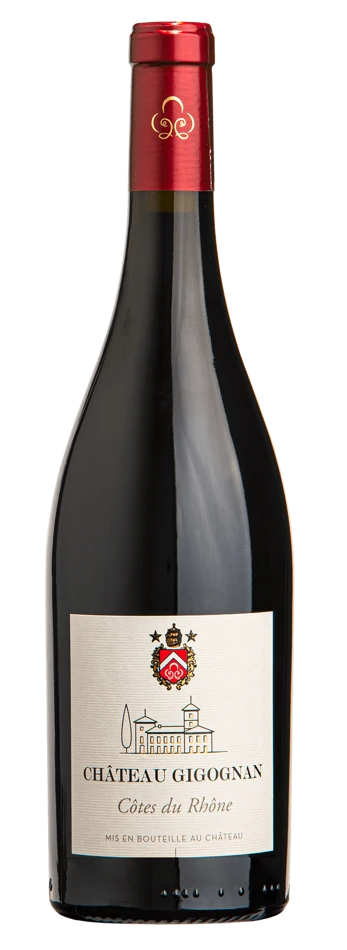
Grenache, Syrah, Mourvèdre, Carignan
Woodland fruit, herbs and soft spice. Supple tannins make this the introduction to the estate, with shared plates or a relaxed meal.
Wine & vintage details ↗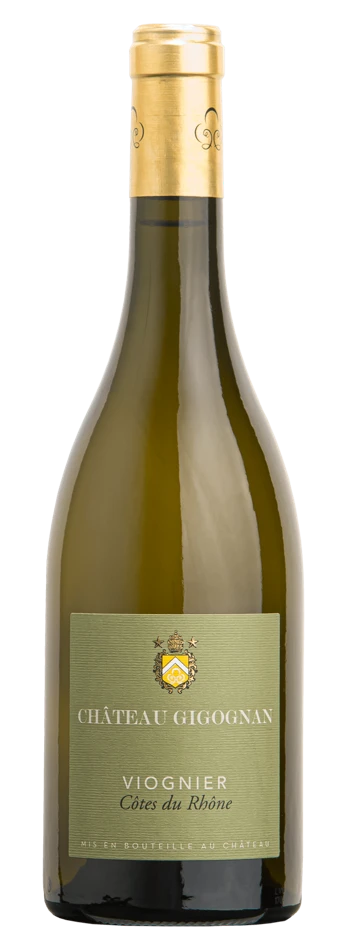
Viognier
Peach, jasmine and rounded fruit. The white to lead with commercially: aromatic, easy to explain and suited to fish or sushi.
Wine & vintage details ↗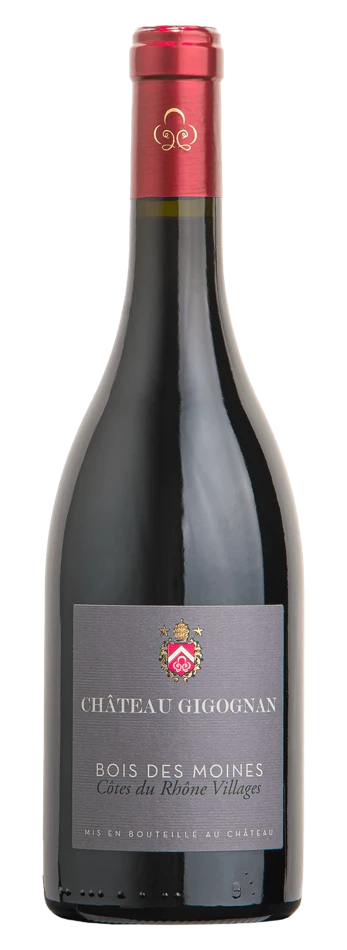
Grenache, Syrah, Mourvèdre
Black fruit, liquorice and spice, with more breadth and depth. A Côtes-du-Rhône Villages to taste beside Clos du Roi and assess for its value.
Wine & vintage details ↗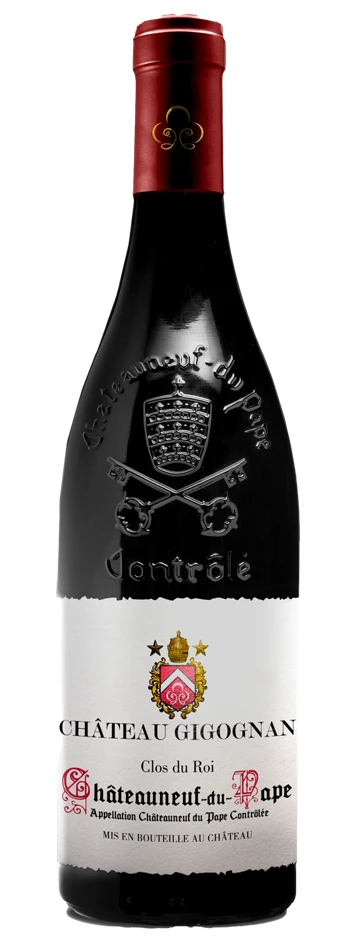
Grenache, Syrah, Mourvèdre
Expressive red fruit, an ample palate and measured oak. The estate’s Châteauneuf-du-Pape signature, for game, red meat and a more considered bottle.
Wine & vintage details ↗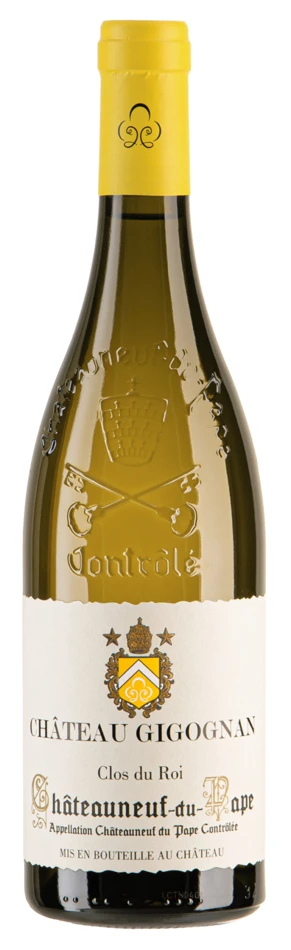
Grenache Blanc, Clairette, Roussanne
White fruit, a little honey and a generous texture. White Châteauneuf for selected lists, richer fish dishes and mature cheese.
Wine & vintage details ↗Recognise the bottle by the Château Gigognan name, then the cuvée and its appellation. Estate bottle images are shown as supplied; pictured label vintages may differ from available stock. Location colours belong to this deck, not the packaging.
Côtes-du-Rhône
Red and woodland fruit, herbs and soft spice, with supple tannins.
Bring to the table Charcuterie, tapas and informal meals.
Wine detailsCôtes-du-Rhône
Peach, tropical fruit and jasmine, with a rounded mouthfeel.
Bring to the table Sushi and fish dishes.
Wine detailsCôtes-du-Rhône Villages
Black fruit, liquorice and spice, with breadth and depth.
Bring to the table Aubergine dishes, braised meat and characterful cheeses.
Wine detailsChâteauneuf-du-Pape
Expressive red fruit, an ample palate and measured oak influence.
Bring to the table Red meat, game and mature cheese.
Wine detailsChâteauneuf-du-Pape
White fruit and acacia-honey notes, with breadth, texture and subtle wood.
Bring to the table Scallops, trout, Comté and richer fish dishes.
Wine details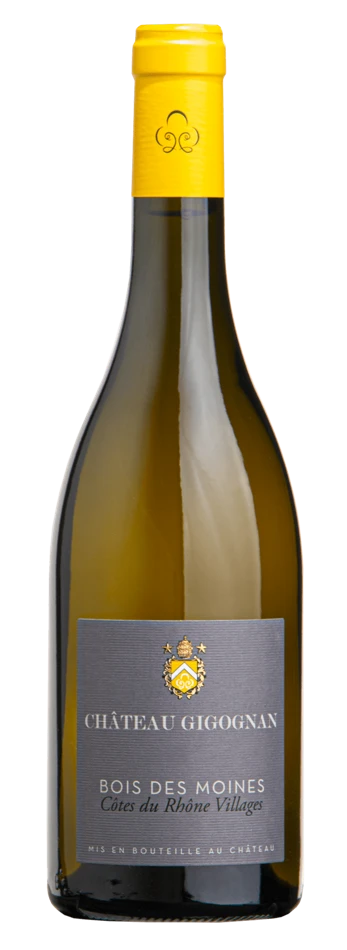
Côtes-du-Rhône Villages
Floral and gently toasted, with a rounded, structured palate.
Bring to the table Scallops, white meat and gently spiced dishes.
Wine details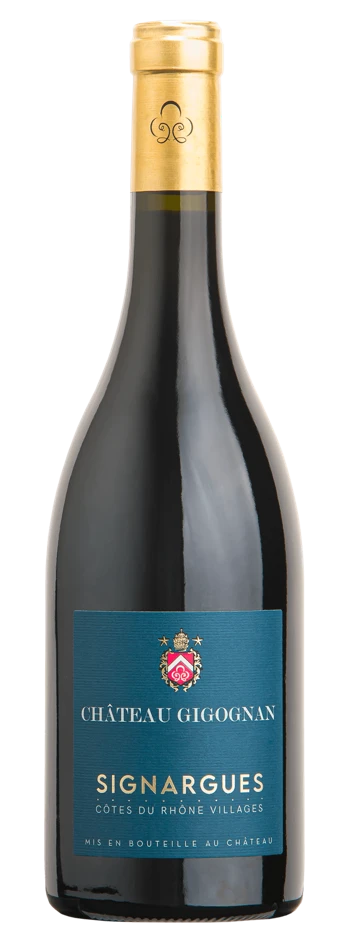
Côtes-du-Rhône Villages Signargues
Woodland fruit, herbs and spice, with a substantial, enveloping palate.
Bring to the table Slow-cooked beef, poultry and Mediterranean vegetables.
Wine details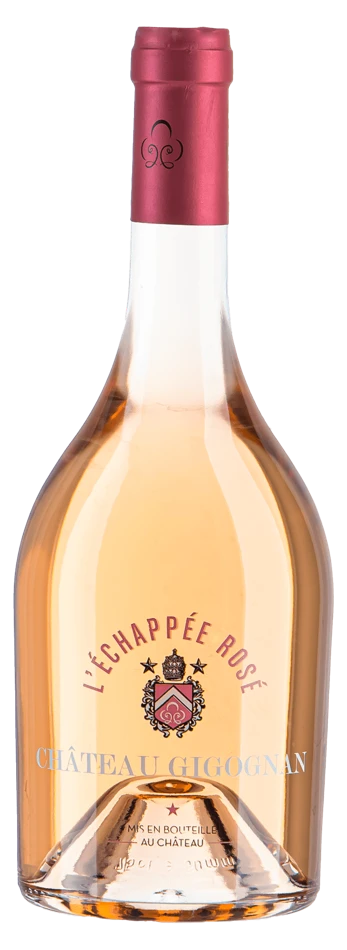
Côtes-du-Rhône Villages
Citrus, floral notes and red fruit with a lively finish.
Bring to the table Ceviche and delicately prepared summer dishes.
Wine details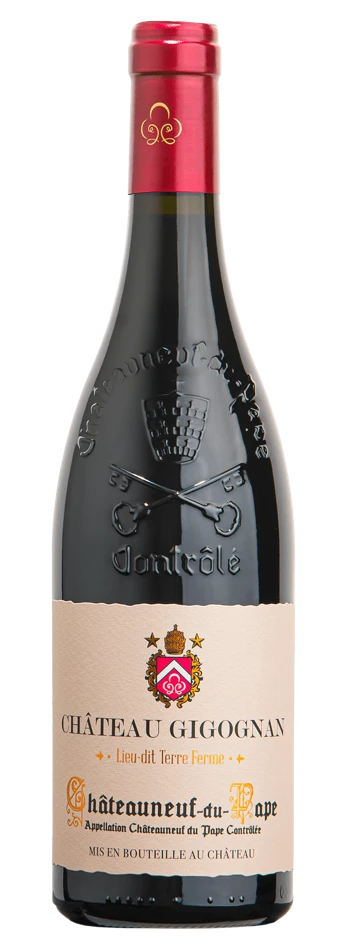
Châteauneuf-du-Pape
Dark, savoury and liquorice-toned, with fine-grained structure.
Bring to the table A considered fine-dining pairing or a mature-bottle dinner.
Wine details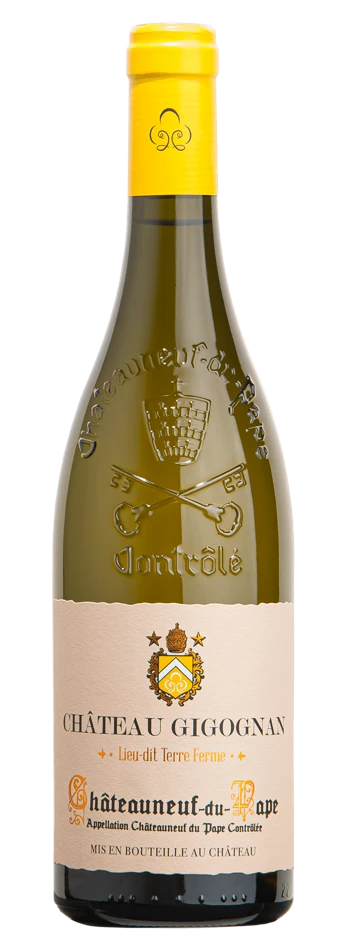
Châteauneuf-du-Pape
Floral, deep and textured, with a long, structured finish.
Bring to the table Poultry, scallops and soft cheeses.
Wine details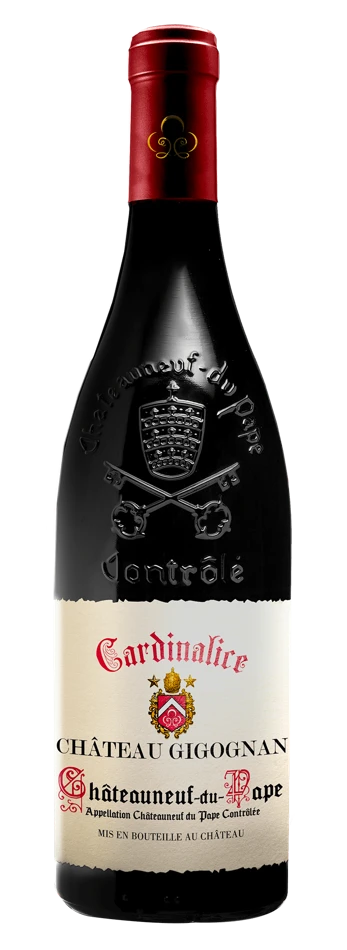
Châteauneuf-du-Pape
Floral perfume, small red fruit and a supple texture.
Bring to the table Braised meat and game dishes.
Wine detailsCritical recognition / Named wines, named vintages
| Wine | Vintage | Score / critic | Archive |
|---|---|---|---|
| Viognier | 2022 | 90/100 · Wine Enthusiast | Page 5 ↗ |
| Bois des Moines Rouge | 2020 | 90/100 · JamesSuckling.com | Page 29 ↗ |
| Clos du Roi Rouge | 2020 | 92/100 · JamesSuckling.com 92/100 · Jeb Dunnuck | Page 25 ↗ |
| Clos du Roi Blanc | 2020 | 94/100 · Decanter 93/100 · JamesSuckling.com | Page 27 ↗ |
| Bois des Moines Blanc | 2021 | 90/100 · JamesSuckling.com | Page 13 ↗ |
| Terre Ferme Blanc · wider range | 2019 | 97/100 · Decanter | Page 38 ↗ |
| Cardinalice · wider range | 2020 | 94/100 · Falstaff | Page 19 ↗ |
Selected scores and critic attributions reproduced from Gigognan’s Ratings and Awards archive. No score for the opening Côtes du Rhône Rouge was found in the reviewed archive. Current-release reviews should be supplied separately. Full estate archive ↗
At the table / Arnaud’s approach
Arnaud’s preferred starting temperature for a trade presentation. Allow the wine to warm gradually in the glass; follow the fruit, texture and finish as it opens.
The estate’s 2023 Viognier sheet recommends around 10°C. Serve cool, then let the floral aromas emerge. Check the vintage sheet for each of the other whites.
Present the wines straight from the bottle. Taste first; make an exception only when a particular bottle needs air or careful separation from sediment.
The red temperature and direct-from-bottle approach are Arnaud’s presentation preferences. Adjust for the wine and its condition. Estate Viognier 2023 technical sheet ↗
The three-minute introduction / Three points to carry
Gigognan is 110 hectares across the southern Rhône, including 40 in Châteauneuf-du-Pape. Since Jean-François Hénin’s arrival in 2017, vineyard renewal, a new cellar and the work with Derenoncourt have given the estate a clear direction: southern depth, with attention to perfume and texture.
Côtes du Rhône Rouge opens the discovery of the estate. Viognier leads the whites with peach, flowers and rounded texture. Bois des Moines Rouge is the next discovery: a Côtes-du-Rhône Villages with the breadth and spice to interest a Châteauneuf drinker.
The red brings Châteauneuf’s depth and structure; the white brings texture to fish, poultry and richer dishes. Five wines, each with its own role, from the same estate. Arnaud Compas is the London contact; Christophe Censier connects the offer directly to Gigognan.
Talking points for a three-minute conversation, with the bottles in front of you. Derenoncourt connection: RVF estate profile ↗.
Château Gigognan
Arnaud Compas
London Office
+44 (0)7775 512539
Christophe · Sales Director
1180 chemin du Castillon, 84700 Sorgues
+33 (0)6 95 62 21 29